Dog Urine and Odor on Artificial Turf in Charlotte's Heat and Humidity: What Actually Works
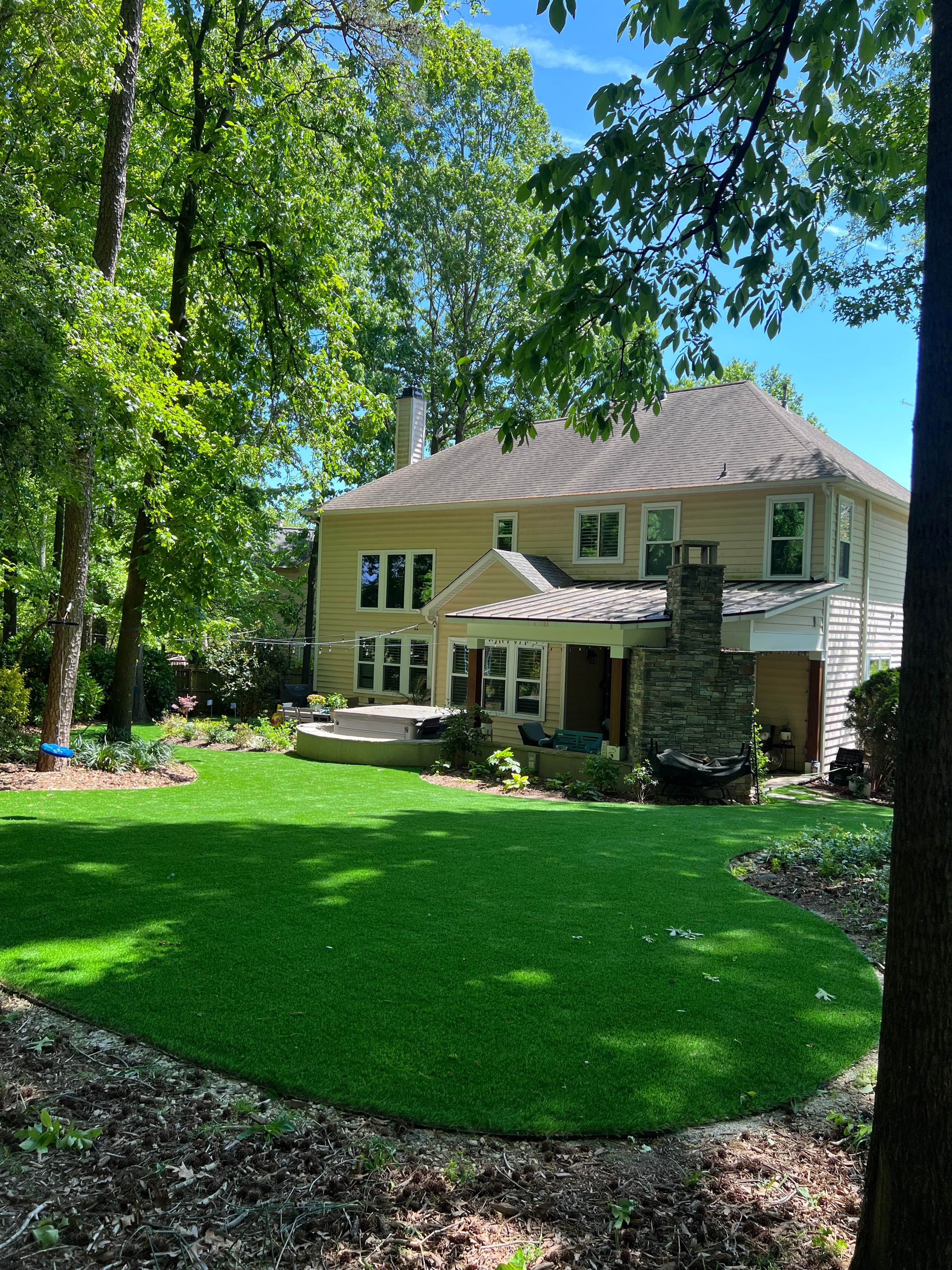
The number one hesitation we hear from Charlotte-area dog owners is not price or looks. It is smell. Someone has a friend, a neighbor, or a bad online review about a turf yard that smelled like a kennel by the middle of summer, and they do not want to trade a muddy, patchy lawn for a stinky one.
Here is the good news: a turf yard that smells is almost never a turf problem. It is a base and drainage problem, and it is entirely preventable. This guide explains why odor happens, why Charlotte's heat and humidity make a poorly built yard worse, what a pet-ready installation includes, and the simple routine that keeps a dog yard fresh year-round.
Why Artificial Turf Develops Odor in the First Place
Artificial turf itself does not hold odor. The fibers do not absorb liquid the way natural soil and grass do. When a turf yard smells, it is because urine is going somewhere it cannot escape and staying there.
Liquid Has Nowhere to Go
On a properly built pet installation, urine passes through the turf backing and drains down through a permeable aggregate base, the same way rainwater does. On a poorly built one, the base is too shallow, too compacted with fine material, or sits on clay that does not drain, so liquid pools under the turf and stays there.
Residue Builds Up in the Infill
Standard sand infill traps residue near the surface. Without regular rinsing, that residue builds up and becomes the source of the smell you notice on a warm afternoon.
Why Charlotte's Climate Makes It Worse
Charlotte-area summers are hot and humid, and that combination is hard on any turf yard that was not built for pets:
- Heat speeds up odor: Warm surfaces make any residue more noticeable, especially in full afternoon sun.
- Humidity slows drying: Damp air means a poorly draining base stays wet longer, which is exactly what odor-causing bacteria need.
- Red clay underneath: Much of the Charlotte region sits on dense clay soil that drains poorly. If the base is not built to compensate, liquid sits. Our guide to Charlotte's red clay and base preparation explains why this matters so much.
What a Pet-Ready Installation Includes
If you have dogs, the installation matters far more than the turf product you pick. A pet-ready system has three parts working together:
1. A Drainage-Focused Base
A compacted, permeable aggregate base engineered to move liquid through and away from the surface. This is the foundation of a fresh-smelling yard. It is also the first place a cut-rate bid saves money, so ask about it directly. Our drainage systems guide covers what to look for.
2. Drainage-Rated Turf Backing
Turf designed with a fully perforated backing lets liquid pass through everywhere, not just at scattered drain holes.
3. Antimicrobial Infill
Pet-focused antimicrobial infill is designed to reduce odor and bacteria in the surface layer. It costs more than standard sand, and for a household with dogs it is usually worth it. We cover the infill options on our pet-friendly turf page.
A Simple Cleaning Routine That Keeps It Fresh
A well-built pet yard is low maintenance, not no maintenance. This routine handles nearly every household:
- Daily: Pick up solid waste promptly, the same as you would on a natural lawn.
- Regularly: Rinse the areas your dog uses most with a garden hose. This flushes liquid through the turf and down into the base before it can build up.
- Periodically: Do a deeper clean with a turf-safe, pet-safe cleaner, especially during hot, humid stretches when odor is most likely to show up.
- Seasonally: Brush the fibers to keep them upright and the infill evenly distributed. Our turf maintenance tips cover the basics.
Check with your installer or the turf manufacturer before using any cleaning product, since harsh chemicals can damage fibers or leave residue.
Common Mistakes That Cause Odor
- Choosing the installer by price alone: A shallow or poorly drained base is the most common cause of a smelly yard, and it is invisible until months after installation.
- Standard sand infill in a dog yard: It works for a decorative lawn, but it holds residue near the surface when dogs use the area every day.
- Skipping the rinse: Even the best system benefits from regular flushing in a hot, humid climate.
- Using harsh cleaners: Strong chemicals can damage the turf and leave residue that causes its own problems.
Frequently Asked Questions
Will my turf yard smell like dog urine?
Not if it is installed correctly. Odor comes from liquid that cannot drain, so a proper permeable base, drainage-rated turf, and antimicrobial infill address the cause directly.
Is artificial turf safe for dogs?
Quality pet turf is designed to be safe and durable for dogs, and it is easy to keep clean. See our complete pet-friendly turf guide for more on safety and product selection.
Can an existing turf yard that smells be fixed?
Often, yes. The right fix depends on whether the problem is surface residue, the infill, or the base underneath. A site visit is the fastest way to tell, since a smell that returns after cleaning usually points to a drainage issue below the turf.
Do I need antimicrobial infill?
For a household where dogs use the yard daily, we recommend it. It is one of the most effective ways to keep the surface layer fresh in Charlotte's humid summers.
How We Help Charlotte-Area Dog Owners
Atlantic Turf Specialists builds pet turf yards across Charlotte, Matthews, Huntersville, Cornelius, Davidson, Mooresville, and the Lake Norman area. Every pet installation is designed around drainage first, so the yard stays clean and fresh rather than just looking good on installation day. If you are comparing bids, our Huntersville pricing guide explains what goes into a fair, itemized quote.
Have a dog and want a yard that stays fresh? Request a free quote and we will walk you through a pet-ready installation for your property.