The Best Time of Year to Install Artificial Turf in Charlotte, NC (And Why It Matters Less Than You Think)
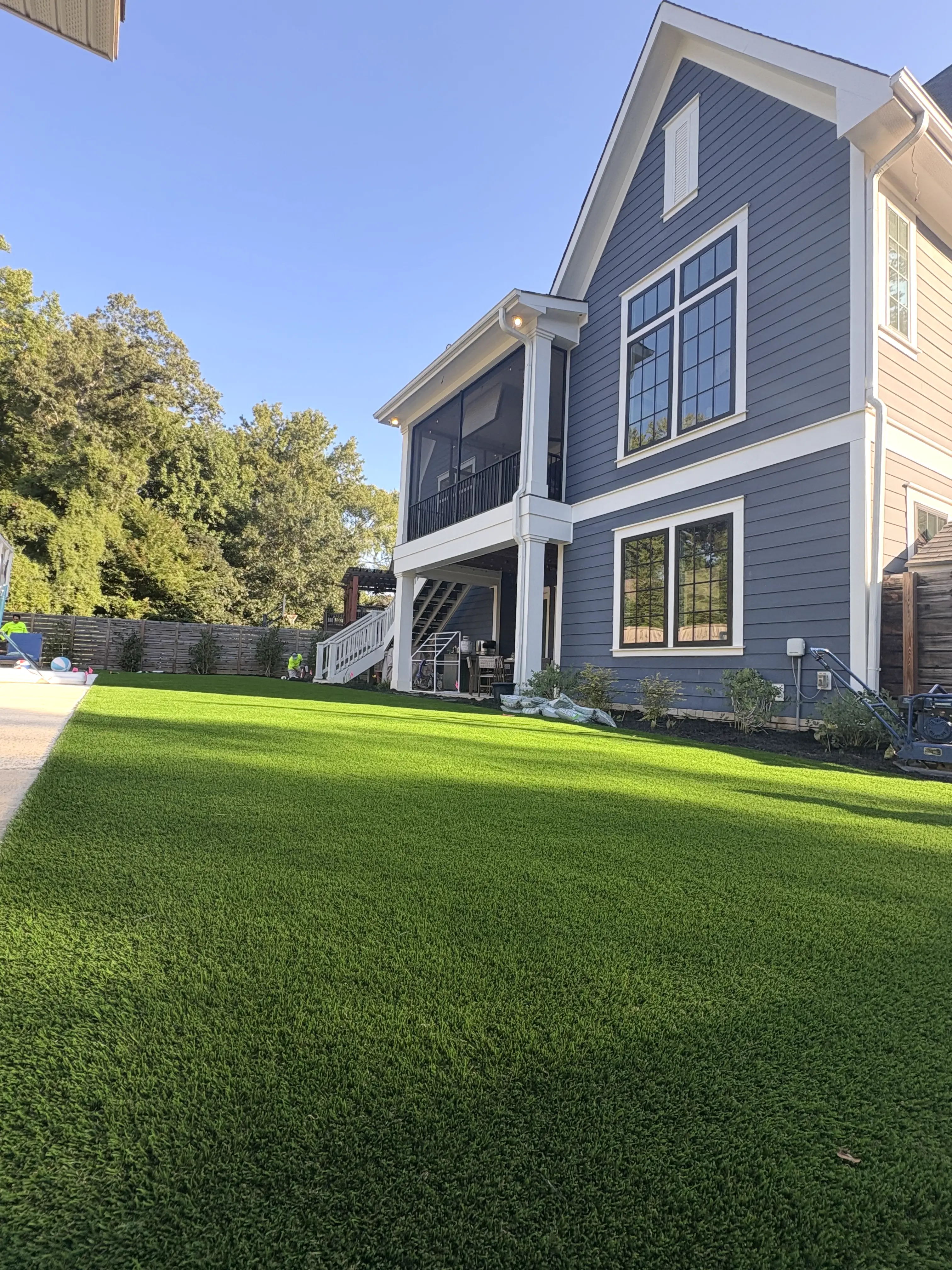
One of the most common questions we get from Charlotte-area homeowners is some version of: "Should I wait until spring?" It is a reasonable question, because it is the right question for sod, seed, and most landscaping. Natural grass has a narrow planting window in the Piedmont, and getting it wrong means starting over.
Artificial turf works differently. There is no germination, no root establishment, and no growing season. What matters instead is ground workability, moisture conditions, and adhesive cure temperature — and in Charlotte's climate, those conditions are favorable for most of the year. Here is the honest breakdown, including the trade-offs nobody mentions.
The Short Answer
Fall is the best season, spring is the busiest, summer is entirely workable, and winter is the most underrated. In the Charlotte metro we install in all twelve months. The difference between seasons is less about installation quality than about scheduling availability, how wet the ground is, and how quickly you want to be using the space.
Fall: September Through November
If we could schedule every project ourselves, most would land here.
Why Fall Works So Well in Charlotte
- Ideal working conditions: Daytime highs in the 60s and 70s mean crews work efficiently and safely, and adhesives cure in their optimal temperature range
- Drier soil than spring: Charlotte's fall is generally our most stable stretch for excavation and compaction, which matters enormously on red clay
- Lower rain-delay risk: Fewer of the intense afternoon thunderstorms that interrupt summer schedules
- Ready for the following spring: Installed in October, your yard is fully settled and usable the moment the weather turns
- No competition with the growing season: Nothing to coordinate with sod or overseeding schedules
The One Fall Consideration
Leaf drop. If your property has mature oaks, maples, or sweetgums, you will be blowing leaves off brand-new turf almost immediately. This is cosmetic, not a problem — but installing in early September ahead of peak drop, or late November after it, avoids the nuisance.
Spring: March Through May
The most requested season, and the one where waiting costs you the most.
The Appeal
- Comfortable working temperatures and long enough days for efficient scheduling
- Immediate payoff: Finished right as outdoor season begins, with the full summer ahead of you
- Natural project timing: Most people think about their yard in April, not January
The Real Trade-offs
- This is peak demand. Every quality installer in the Charlotte market is booked deepest in spring. Lead times stretch, and the crews with real local experience fill first.
- Spring is wet. March and April rainfall on Piedmont clay produces the worst excavation conditions of the year. Saturated clay cannot be properly compacted, so responsible installers postpone rather than build on a subgrade that will settle. Expect weather delays.
- HOA review backlog. Architectural committees see their heaviest volume in spring. If you need approval, a spring submission may push your install into summer regardless.
- Pollen. Charlotte's spring pollen load is significant, and new turf will need rinsing early on.
Practical advice: If you want spring installation, book in January or February. Homeowners who call in April are frequently scheduling for June.
Summer: June Through August
Workable, common, and better than its reputation — with real heat considerations.
Advantages
- Dry, firm ground: Summer often delivers the most consistently workable clay of the year, which is genuinely good for base construction
- Fast adhesive cure in warm conditions
- Long daylight hours, letting crews complete more per day
- Post-spring availability: Scheduling frequently opens up as the spring rush clears
- Immediate relief: If your natural lawn is a dust bowl by July, you stop watching it die
Considerations
- Heat safety: Crews start early and pace the day. High-90s heat index affects productivity, so a project may span an extra day.
- Afternoon thunderstorms: Charlotte summers bring sudden intense rain that can pause work mid-afternoon
- New turf runs warm initially: Fresh turf in full sun feels hot until infill settles and fibers relax. Heat-reflective fiber and cooling infill matter most for summer installs.
- Drought restrictions are irrelevant: Worth noting — unlike sod, turf needs no establishment watering, so utility restrictions never delay a project
Winter: December Through February
The most underrated window in the Charlotte market, and often the best value.
Why Winter Installation Works Here
This is where Charlotte's climate is a genuine advantage over colder markets. Our winters are mild — typical highs in the 40s and 50s, with hard freezes brief and snowfall rare. Frozen ground is the actual barrier to winter turf installation, and the Piedmont rarely freezes deeply or for long.
- Best scheduling availability all year. Crews are not competing with spring backlog, so you get earlier dates and often the most experienced team.
- Potential off-season pricing. Many installers, including us, have more flexibility on winter scheduling.
- Nothing to disturb: Dormant landscaping means less impact on surrounding plantings
- Ready before spring: A February install means a finished, settled yard in March while others are still waiting on estimates
- HOA committees are quiet: Fastest architectural review turnaround of the year
Genuine Winter Limitations
- Hard freeze pauses work: Frozen ground cannot be excavated or compacted properly. In Charlotte this is usually a few scattered days, not weeks.
- Adhesive cure temperature: Seam adhesives have minimum application temperatures. Crews work midday windows and use cold-weather-rated products, but a sustained cold snap can shift a schedule.
- Shorter days: Less daylight means a project may take an additional day
- Winter wet spells: Charlotte gets rainy winter stretches, and saturated clay is a delay in any season
What Actually Determines Timing
Season is one input. In practice these matter more:
- HOA approval. A 30 to 45 day architectural review cycle drives more timelines than weather does. Submit early.
- Ground moisture at the time of excavation. A dry week in February beats a saturated week in May for base quality. Any installer who will build on saturated clay to hit a date is the wrong installer.
- Coordination with other trades. Turf should follow pool construction, hardscape, irrigation modification, and grading. Sequencing it first means damage or rework.
- Installer availability. The quality of the crew matters more than the month. Waiting three weeks for an experienced team beats hiring whoever is free tomorrow.
- When you want to use it. Working backward from a graduation party, a wedding, or the start of pool season is a perfectly good way to plan.
How Long Does Installation Take?
- Small area, under 500 sq ft: 1 to 2 days
- Typical residential lawn, 500 to 1,500 sq ft: 2 to 4 days
- Large lawn or multi-zone project: 4 to 7 days
- Putting green with contours: 3 to 6 days depending on size and complexity
- Pool surround with radius work: 3 to 5 days
- Add for supplemental drainage: 1 to 2 additional days
And unlike sod, there is no establishment period. There is no watering schedule, no staying off the grass for three weeks, no waiting for roots. Your turf is fully usable the day the crew leaves.
The Bottom Line for Charlotte Homeowners
Do not delay a project by six months waiting for a mythical perfect window. The best time to install artificial turf in Charlotte is when you have chosen a quality installer, secured any required HOA approval, sequenced it correctly with your other outdoor work, and the ground is workable. That describes most of the year here.
If you want a specific recommendation: submit for HOA approval in winter and install in early fall or late winter. You will get better crew availability, better ground conditions, and better scheduling than the spring rush.
Want to know our current lead time? Request a free estimate — we will give you an honest schedule and tell you if waiting for a better window makes sense for your specific site.