Working With a Turf Subcontractor: What Charlotte Builders and General Contractors Should Require
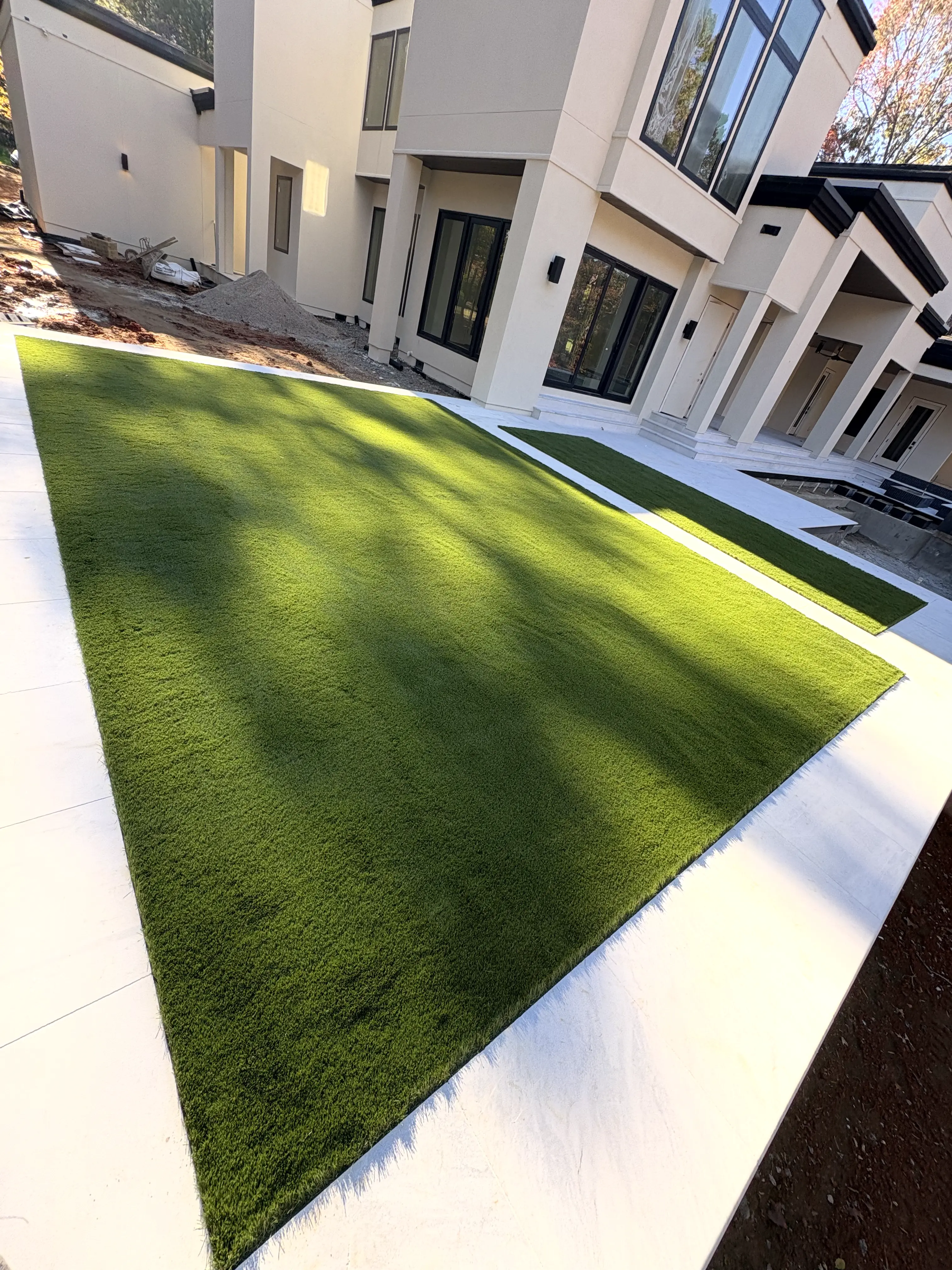
For a general contractor, custom home builder, or commercial developer, artificial turf is rarely the interesting part of the project. It is a line item near the end of the schedule that can either close out cleanly or generate a punch list item, a warranty callback, and an uncomfortable conversation with an owner who just spent seven figures on a house.
We work as a turf subcontractor for builders across the Charlotte metro, and the projects that go smoothly share the same characteristics: the sub was vetted properly, the scope was written clearly, and the work was sequenced in the right order. Here is what that looks like from the inside.
Vetting a Turf Subcontractor
The synthetic turf trade has a low barrier to entry. Anyone with a truck, a compactor, and a supplier account can bid, which means bid spreads on identical scopes are frequently 40 percent or more. That spread is almost never the turf — it is base depth, aggregate tonnage, drainage, and whether the crew carries real coverage.
Non-Negotiable Documentation
- Current certificate of insurance with general liability limits appropriate to your project, naming you as additional insured
- Workers' compensation coverage with a current certificate — this is where uninsured subs create the largest exposure for a GC
- Appropriate North Carolina licensing for the scope and contract value
- W-9 and lien waiver process that matches your standard closeout requirements
- Ability to be added to your COI tracking system and keep it current through project close
Technical Qualification Questions
- What base profile do you build on Piedmont clay? You should hear specifics: excavation depth, geotextile separation, angular aggregate in compacted lifts, positive grade to a discharge point. A vague answer here predicts a callback.
- Where does water go? They should discuss the actual lot, tie-ins to existing storm structures, and downspout integration — not generalities about permeable turf.
- What is warranted, and by whom? Separate the manufacturer's material warranty from the installer's workmanship warranty. Material-only coverage leaves base settlement as your problem.
- Crew composition — employees or day labor? Consistent crews produce consistent seams. This is visible in the finished product.
- Comparable projects with references. Specifically, projects for other builders, not just direct-to-homeowner work. Builder work has different tolerances and different closeout expectations.
- Capacity and lead time. Can they commit to a date window and hold it, and what happens if your schedule slides two weeks?
Sequencing: Where Turf Belongs in the Schedule
Most turf problems on builder projects are sequencing problems, not workmanship problems. Turf goes late, and it goes after anything that involves equipment, water, or grade.
Must Be Complete Before Turf Mobilizes
- Final grade established and approved. Turf cannot correct a grading problem, and rough grade changes after install mean tear-out.
- All hardscape complete and cured. Patios, walkways, driveways, retaining walls, coping. Turf details to hardscape, so hardscape sets the line.
- Pool construction and deck finished. Including equipment set and plumbing pressure tested.
- Irrigation modified or capped, with heads relocated out of turf areas and lines located and marked.
- Low-voltage and landscape lighting sleeves and conduit run under future turf areas. Retrofitting a sleeve means cutting a finished surface.
- Downspouts and site drainage resolved, or at minimum designed, so tie-ins can be built into the base.
- Heavy equipment access no longer needed across the turf area. A finished turf surface is not a haul road.
- Utility locates complete. Base excavation is 4 to 8 inches deep and will find unmarked lines.
Coordinates Well With Turf
- Planting and bed installation, where bed edges and turf edges meet — worth a joint walk to agree on the line
- Fencing, which should generally be set before turf so post holes are not dug through finished surface
- Playground equipment, where a turf pad and shock pad system must be coordinated with equipment layout and use zones
Should Follow Turf
- Final cleaning and owner walkthrough
- Furniture, fire features, and outdoor kitchen appliance placement
- Final mulch top-dress at bed edges
Writing a Scope of Work That Prevents Disputes
Vague turf scopes are where change orders come from. A defensible scope specifies:
- Area and limits: Square footage with a marked plan showing exact boundaries, not "backyard"
- Turf product by name and spec: Manufacturer, product line, pile height, face weight, fiber shape, color blend, warranty term
- Infill type and application rate in pounds per square foot
- Base profile: Excavation depth, geotextile, aggregate type and depth by lift, compaction method
- Spoil disposal: Who hauls excavated material, and is it included
- Drainage scope: Any French drains, channel drains, catch basins, downspout tie-ins, and the defined discharge point
- Edge treatment at each condition — hardscape, bed, fence line, existing lawn
- Seam layout expectations and where seams may not fall
- Site access, staging, water source, and dumpster access
- Protection of finished work and who is responsible if another trade damages turf after acceptance
- Warranty terms separated into material and workmanship, with duration and what triggers a callback
- Closeout deliverables: Warranty documents, maintenance instructions for the owner, lien waiver, as-built drainage notes
Where Builders Get Burned
Accepting the Low Bid on Base Scope
Base work is invisible at final walkthrough and fails in year two — which is inside most builder warranty periods. A sub who saves you $3,000 by excavating three inches instead of six on red clay has handed you a settlement callback on a home you have already closed.
No Defined Drainage Discharge
"The turf is permeable" is not a drainage plan on Piedmont clay. Water passes through the turf, reaches clay, and goes wherever grade sends it. On a tight lot that can mean a neighbor's property and a legitimate complaint. Require a named discharge point.
Turf Installed Before Hardscape Is Final
If a patio expands by two feet after turf is down, you are paying for turf twice. Lock hardscape dimensions before the turf sub mobilizes.
Uninsured Crews
Base excavation involves compaction equipment, saw cutting, and material handling. An injury on an uninsured crew becomes your exposure, and it will not be a small number.
No Owner Maintenance Handoff
Owners who are never told to brush high-traffic lanes or keep leaves off will call you in eighteen months about matting and staining. A one-page maintenance handoff at closeout prevents a meaningful share of callbacks.
Where Turf Helps You Sell the Project
For custom builders and spec developers, turf is a genuine differentiator worth positioning:
- Finished the day it is installed. No sod establishment window, no watering schedule, no brown patches at a spring walkthrough or a model home showing.
- Solves the problem lots. Deep shade under mature canopy, steep side slopes, narrow side yards, and drainage swales where sod will never establish.
- Eliminates a warranty category. No dead sod claims, no irrigation coverage disputes in turf areas.
- Strong buyer appeal in this market. Charlotte buyers, particularly in the upper price tiers, respond to putting greens, pool surrounds, and low-maintenance outdoor living.
- Photographs consistently for listing and marketing photography in any season.
Commercial and Multi-Family Considerations
On commercial, multi-family, and institutional work, add:
- Playground surfacing standards where applicable — ASTM F1292 critical fall height, ASTM F1951 accessibility, IPEMA certification, and full use-zone coverage per ASTM F1487
- ADA accessible route compliance across turf surfaces
- Stormwater permit coordination, since turf areas and drainage tie-ins may interact with an approved stormwater plan
- Phasing around occupancy, including night and weekend work windows for occupied properties
- Submittal packages: Product data, warranty, test reports, and shop drawings for architect and owner review
- Prevailing wage or procurement requirements on public work
How We Work With Builders
Atlantic Turf Specialists subcontracts to general contractors, custom home builders, landscape design-build firms, pool builders, and developers throughout Charlotte, Huntersville, Cornelius, Davidson, Lake Norman, Mooresville, Concord, Matthews, Mint Hill, Indian Trail, Waxhaw, and Fort Mill. We are licensed and insured, we provide COIs and additional insured endorsements on request, we hold committed date windows, and we build every base for Piedmont clay conditions with documented drainage.
We also bid from plans, provide submittal-ready product data and warranty documentation, and deliver an owner maintenance handoff at closeout so the callback never reaches your desk.
Need a turf sub on a Charlotte-area project? Request a sub bid or contact our team to discuss scheduling and scope.