HOA Approval for Artificial Turf in Charlotte, NC: Rules, Requirements & How to Get Approved in 2026
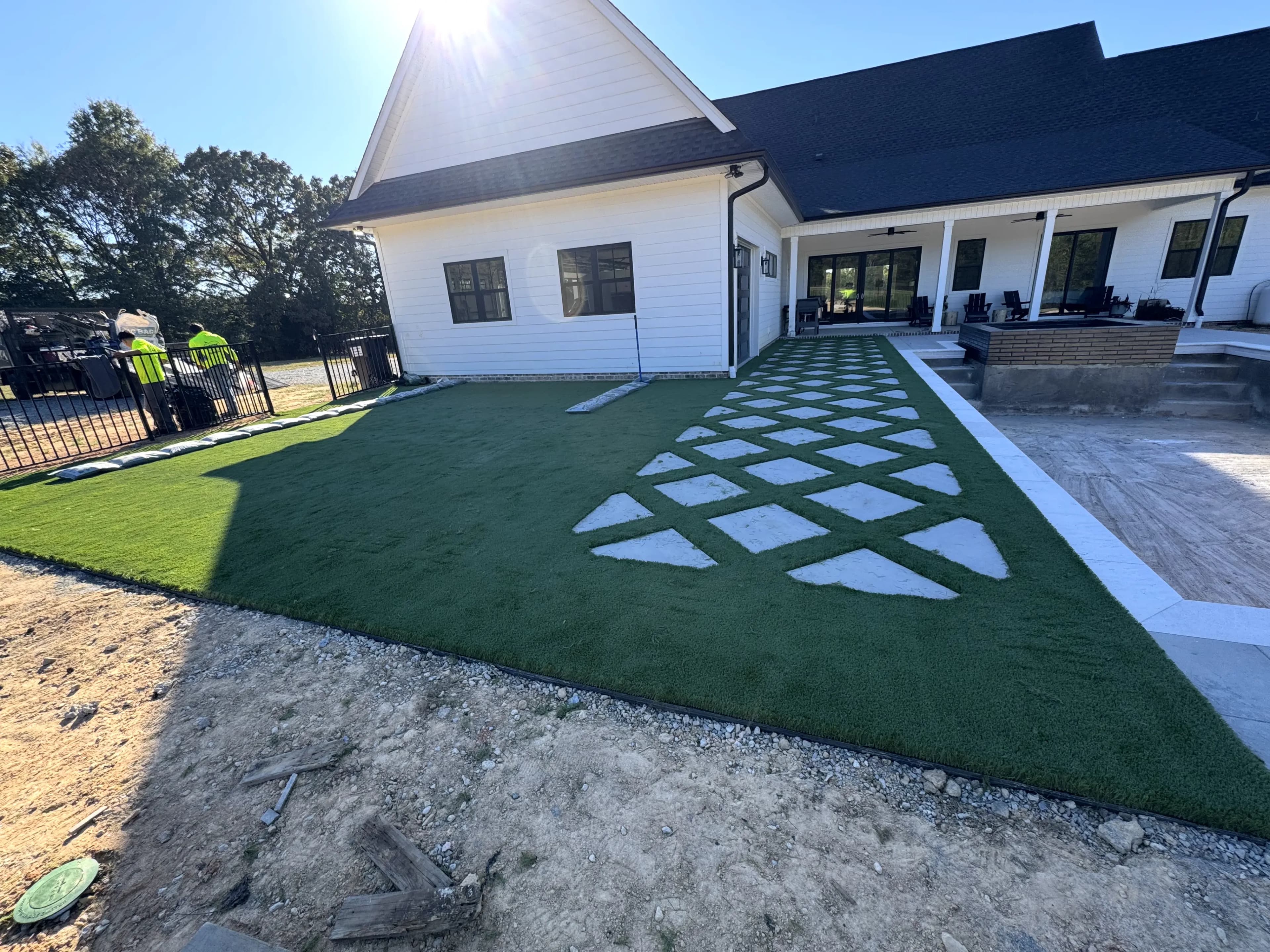
If you live in Ballantyne, Piper Glen, Providence, Highland Creek, Birkdale, Baxter Village, or almost any planned community across the Charlotte metro, your artificial turf project has one gatekeeper before it has a shovel in the ground: the homeowners association. The good news is that HOA approval for synthetic turf has gotten dramatically easier over the last five years. The bad news is that homeowners who submit an incomplete application, or who install first and ask later, are the ones who end up paying twice.
This guide walks through how architectural review actually works in Charlotte-area communities, the specific product and installation details boards care about, and the submission strategy that gets projects approved on the first pass.
Is Artificial Turf Allowed by HOAs in North Carolina?
There is no North Carolina state law that forces an HOA to permit artificial turf, and there is no law that bans it either. Unlike several drought-state jurisdictions that have passed "turf choice" statutes overriding HOA restrictions, North Carolina leaves the decision to each community's recorded covenants. That means your answer lives in your own governing documents, not in a general rule.
In practice, Charlotte-area communities fall into three buckets:
- Silent covenants (most common): The documents predate synthetic turf's popularity and never mention it. Approval comes down to the architectural review committee's discretion, which is why presentation matters enormously.
- Conditionally permitted: Turf is allowed with stated limits, often restricted to rear yards, capped at a percentage of the lot, or required to be screened from the street.
- Explicitly restricted: A small number of older, more traditional communities require natural grass in all visible areas. Rear-yard putting greens and pet runs are still frequently approved even here.
Find Your Answer in Three Documents
Before you do anything else, pull these and search them for the words turf, synthetic, artificial, lawn, and landscap:
- The CC&Rs (Declaration of Covenants, Conditions & Restrictions): The recorded, binding document. This governs.
- Architectural or Design Guidelines: Usually a separate, more detailed and more frequently updated companion document. This is where turf language most often appears.
- Recent meeting minutes: Underrated. If the board approved a neighbor's turf install last spring, that precedent is your single strongest argument.
Mecklenburg County records recorded covenants publicly, and your management company must provide current guidelines on request. If your community uses a portal such as CINC, AppFolio, or TownSq, the architectural request form and guidelines are typically both available there.
What Charlotte HOA Boards Actually Care About
Architectural committees are rarely opposed to synthetic turf as a concept. They are trying to prevent five specific outcomes, and if your application addresses each one directly, you remove nearly every reason to say no.
1. It Must Not Look Like Turf
The single biggest driver of denials is the fear of a flat, uniformly bright green carpet. Modern premium turf solves this, but your application has to prove it:
- Multi-tone fiber blends: Two or more green tones plus a tan or brown thatch layer that mimics natural dormancy
- Realistic pile height: 1.5 to 1.75 inches for residential lawn areas reads as natural; shorter pile reads as sports turf
- Non-directional or varied blade shapes: W-blade, S-blade, or omega-shaped fibers that resist matting and avoid an artificial sheen
- Matte finish: Low-luster fibers prevent the plastic shine that boards associate with cheap product
2. Drainage Cannot Affect the Neighbors
This is the concern that quietly kills applications in Charlotte, because our red clay subsoil already makes stormwater a sensitive topic. Boards want assurance that you are not creating a new runoff path onto an adjacent lot or into a common area. A properly engineered system actually improves drainage over compacted clay lawn, and your submission should say so explicitly, with the base cross-section documented.
3. The Transition Edges Must Be Clean
Where turf meets mulch beds, concrete, pavers, or remaining natural grass is where amateur installs look worst. Specify your edging method — bender board, paver borders, or trenched-and-buried perimeter — and note that seams will be positioned away from primary sightlines.
4. It Must Be Professionally Installed and Insured
Boards are protecting the association from liability and from a half-finished job. Naming a licensed, insured local installer and attaching a certificate of insurance resolves this instantly. DIY applications face materially higher scrutiny.
5. It Must Be Consistent With the Streetscape
Front-yard applications draw the most scrutiny because they affect the shared visual character of the street. Rear yards, side yards, pet runs, and putting greens are approved far more readily. If your goal is a front lawn, expect to negotiate.
The Submission Package That Gets Approved
Committees approve applications that require no follow-up questions. Every unanswered question is a 30-day delay to the next meeting. Submit all of the following together:
- The community's official architectural request form, completed in full — not a substitute letter
- A site plan or plat with the turf area outlined, dimensioned, and square footage noted
- Photographs of the existing area from the same angles a neighbor would see it
- The manufacturer's product specification sheet, showing pile height, face weight, fiber shape, color blend, permeability rate, and UV warranty
- A physical turf sample if the committee meets in person — this converts skeptics faster than any document
- A base and drainage cross-section describing excavation depth, aggregate base, compaction, and infill
- Your installer's license and certificate of insurance
- Photos of comparable completed installations, ideally within the Charlotte metro and ideally within your own community
- A short project timeline with expected start and completion dates
Realistic Timelines
- Standard review window: 30 to 45 days is typical, and many CC&Rs specify a maximum response period after which the request is deemed approved
- Meeting cadence: Most Charlotte-area committees meet monthly, so a submission that misses the agenda deadline waits a full cycle
- Plan for the season: Submit in late winter for a spring install; spring submissions frequently collide with the committee's busiest backlog
Positioning Your Request: Language That Works
Frame the project around benefits the association itself cares about, not just your own preferences:
- Consistent appearance year-round: No dormant brown patches in July drought or February cold, which supports neighborhood curb appeal
- Eliminates chemical runoff: No fertilizer, herbicide, or pesticide entering common-area stormwater systems
- Water conservation: Meaningful reduction in irrigation demand, which matters during Charlotte-Mecklenburg Utilities restrictions
- Solves problems the HOA has already cited: If you have received violation notices for bare spots under mature shade trees or pet damage, say so — turf is the permanent fix
- No equipment noise: Removes weekly mowing and blowing from the property
If You Are Denied
A denial is frequently a negotiation, not a verdict. Your options in order of effectiveness:
- Request the specific written reason. Vague denials are hard to fix and, in many communities, procedurally improper.
- Resubmit a reduced scope. Rear yard only, or a defined putting green or pet area rather than a full lawn replacement, clears most objections.
- Upgrade the specification. If the concern was appearance, resubmitting with a higher face weight and a more natural multi-tone blend directly answers it.
- Ask to present in person. A five-minute presentation with a physical sample changes outcomes more often than another email.
- Request a hearing before the full board if the architectural committee is a subcommittee with limited authority.
- Propose a guideline amendment. If several neighbors want the same thing, a formal amendment permanently resolves it for the whole community.
What not to do: Never install without approval. Under the North Carolina Planned Community Act, associations can levy fines, place liens, and compel removal at your expense. A denied appeal is inconvenient; a forced tear-out of a completed installation is expensive.
A Note on Rental Properties and Custom Builds
If you are a builder or investor, submit the turf specification as part of the original architectural package for the home rather than as a change request afterward. Approval rates are significantly higher when turf is presented as part of an integrated landscape design at permitting stage, and it avoids a post-closing dispute between you and the buyer.
How We Help With Approval
Atlantic Turf Specialists has been through architectural review in communities across Charlotte, Huntersville, Cornelius, Davidson, Waxhaw, Fort Mill, Matthews, Mint Hill, Indian Trail, Concord, Mooresville, and the Lake Norman corridor. We provide the full submission package — spec sheets, drainage cross-sections, license and insurance documentation, physical samples, and comparable project photography — at no cost, because a well-documented application is faster for everyone.
If you have already been denied, bring us the written reason. In most cases there is a scope or specification change that resolves the board's objection without abandoning the project.
Ready to start? Request a free consultation and we will prepare your HOA submission package alongside your estimate.